


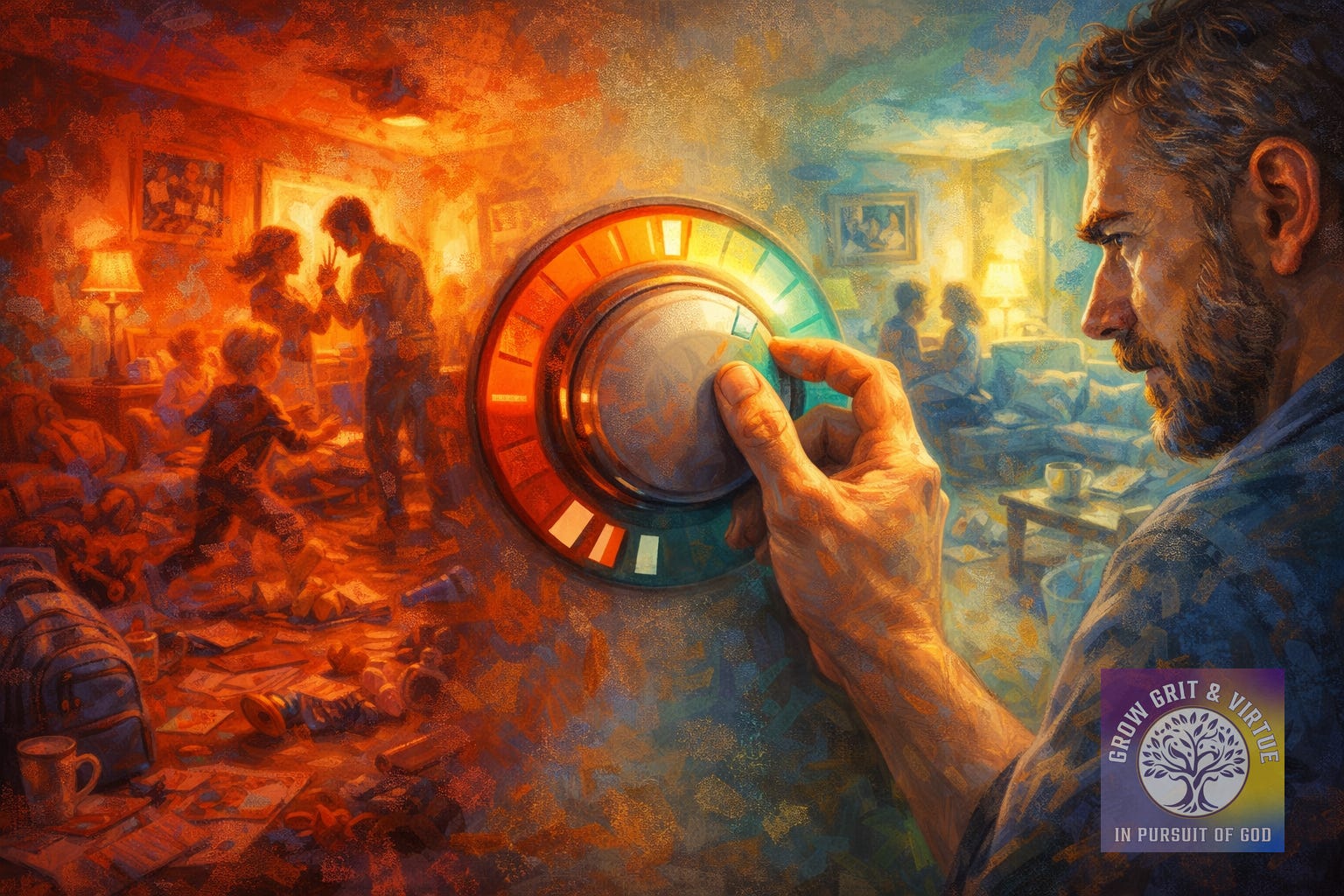
Most of us hear the word “hostile” and picture a man punching a wall, a couple screaming in the driveway, or a kid throwing a chair in a classroom. We don’t picture ourselves. We picture “those families,” the ones that end up in a police report or a prayer request. But hostility usually doesn’t start as violence. It starts as a climate. A tone. A look. A sharp edge in the voice. A habit of assuming the worst. A place where people feel like they’re walking through a room full of mousetraps.
Confession: after a long day, I love flipping on Judge Judy, The People’s Court, or the old reruns with Judge Wapner. Part of it is pure nostalgia—like background noise from a simpler era—but part of it is that these judges cut through the fog so fast. They don’t let people hide behind a ten‑minute story, a pile of excuses, or a bunch of “he said, she said.” They ask direct questions until the truth shows its face. And if I’m honest, it’s also a way to unwind that makes me smirk and think, “Well, at least we’re not that bad.” But that little comfort can fool us, because hostility doesn’t only show up in extreme families on TV. It shows up in decent families too—mine included—usually in small, ordinary ways.
Hostility is often unrecognized resentment that has never been handled, so it leaks. It shows up as sarcasm. As cold silence. As “fine.” As a slammed cabinet. As a text that feels like a door shutting. As a “joke” that feels like a slap. You don’t have to throw punches to train a child’s nervous system to expect combat.
Children don’t only learn from what we say. They learn from what the air feels like when we walk in the room. They learn what conflict means by watching how we carry it. They learn whether people are safe when they’re upset.
When a child grows up in a hostile climate, two common shapes form. One kid becomes a little soldier. Always ready. Always scanning. Quick to argue, quick to strike first—because in his mind, somebody is always about to shoulder-check you. Another kid becomes a ghost.
