


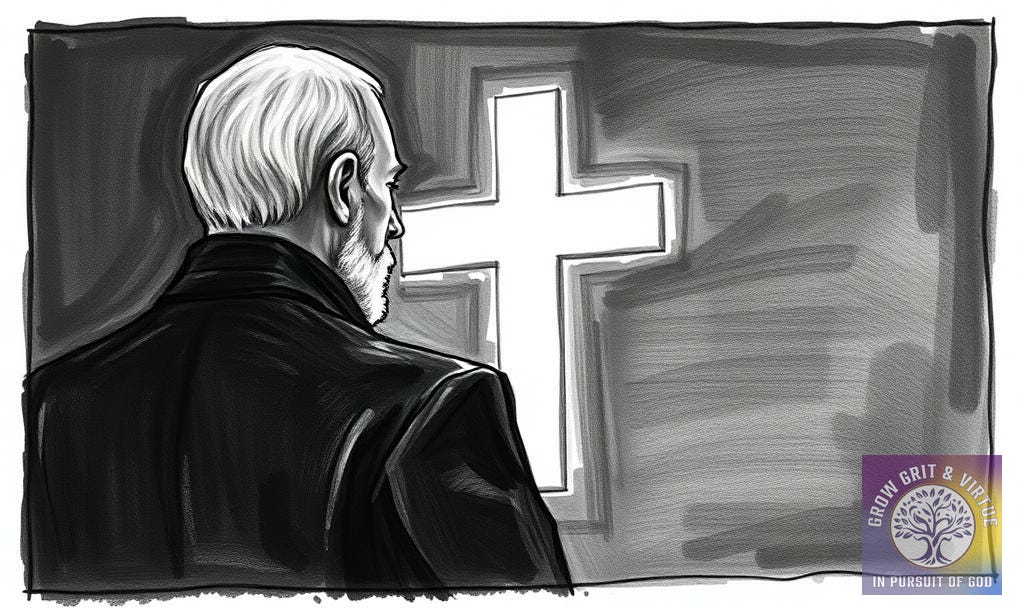
Above Carl Jung’s doorway are etched the Latin words: "Vocatus atque non vocatus, Deus aderit." Translated, it means: "Called or not called, God will be present." It sounds almost biblical. It feels reassuring. But it conceals a profound departure from the Christian story.
Because the question isn’t whether God is present. The question is who God is—and whether His presence calls us to worship or to wander deeper into ourselves.
Jung was a spiritual man, no doubt. He spoke of God. He dreamed of angels and demons. He saw meaning in myths, visions in dreams, and spiritual power in the psyche. But the God Jung pointed to is not the God of Abraham, Isaac, and Jacob. Not the crucified and risen Christ. Not the One who speaks us into being, names us in love, and redeems us from sin through grace.
To understand where Jung went wrong, you have to understand what he was trying to do—and where he was coming from.
