



"When Christ calls a man, he bids him come and die." – Dietrich Bonhoeffer
You can order groceries from your couch, turn down the AC with your phone, and get affirmation from strangers with a swipe. We live in an age of near-instant ease, where comfort is considered a right and hardship a design flaw. But when life cracks open, when your marriage starts to drift, your kids ask questions you can’t answer, or your character is quietly bleeding out from one compromise after another—ease won’t save you. It never could.
Today, more people than ever before report struggling with anxiety, depression, and a persistent sense of meaninglessness—despite having access to more information, convenience, and entertainment than any generation in history. We’ve never been more connected, yet we’ve never felt more alone. We’ve mastered the art of comfort and lost the muscle of courage.
Everything about modern life nudges us toward ease. We use GPS so we never get lost, apps so we never have to wait, subscriptions so we never have to run out. We're marketed lifestyles built around optimization, speed, and predictability. It’s no wonder that hardship feels like a glitch in the system—as if something’s gone wrong when we feel pain, grief, boredom, or resistance.
In this new world, pain isn’t something to face. It’s something to medicate, avoid, or scroll away from. And here’s the consequence: we’ve built a culture so insulated from discomfort that any experience of difficulty now feels like injustice. We've internalized the lie that if something is hard, it must be wrong—or worse, someone else’s fault.
In this system, courage is countercultural. Not the loud kind of courage, but the quiet kind that gets up when the alarm goes off. The kind that stays married, prays when no one is watching, walks into the counselor’s office, or seeks forgiveness first. That’s what I mean when I say we’re suffering not from a lack of information—but from a shortage of courage.
We know what to do. We’ve read the blogs. We’ve listened to the podcasts. We’ve heard the sermons. But knowledge isn’t transformation. We’re drowning in resources and starving for resolve.
That’s why the kind of courage that matters now is the kind you can’t livestream. The kind that happens in kitchens and cubicles. When the dishwasher is full again. When the toddler won’t sleep. When your spouse shuts down. When your boss overlooks you. That’s the battlefield. And that’s what’s costing us dearly—the slow erosion of character from a thousand deferred confrontations.
Ease never builds grit. Algorithms don’t form saints. What we need is a recovery of spiritual stamina—the holy resistance to the creeping paralysis of comfort. Because as Bonhoeffer said, when Christ calls a man, He doesn’t offer him a recliner. He bids him come and die. Not once. But daily.
This is the kind of death that makes room for life. Real life.
Avoidance Is the Devil's Favorite Tactic
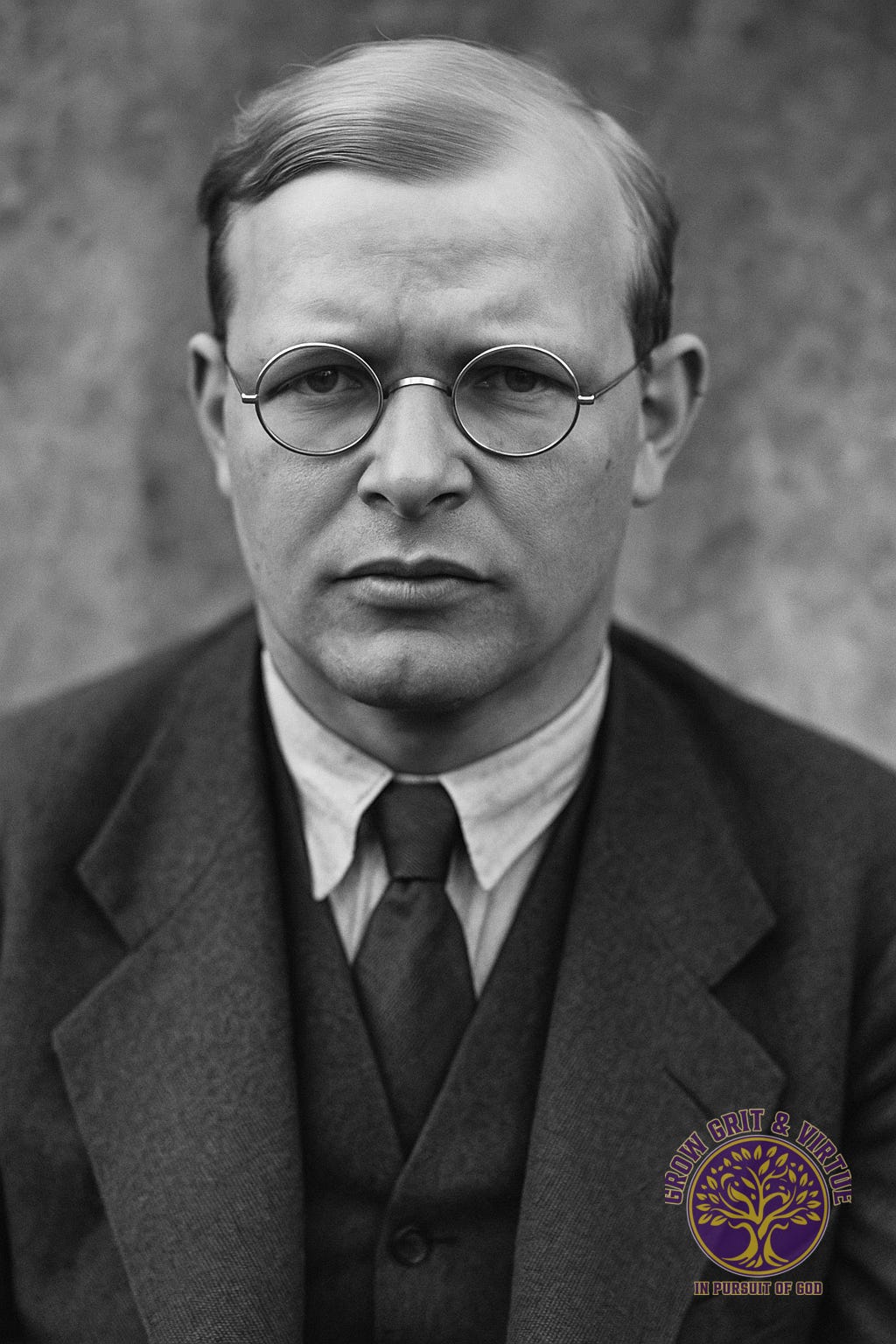
When much of the German Church chose silence—or worse, complicity—in the face of Nazi atrocities, Dietrich Bonhoeffer stood alone. While other pastors rationalized their loyalty to the regime as “obedience to authority” or “preservation of unity,” Bonhoeffer resisted the pressure to dilute his message. He publicly denounced Hitler’s actions, helped form the Confessing Church in opposition to the state-run Reich Church, and became part of the resistance—risking his freedom and eventually his life.
But his most powerful decisions were not always public. They happened in private rooms, prayerful silence, and agonizing discernment. He returned to Germany from safety in the United States, knowing full well it could mean imprisonment or death. He mentored young pastors in underground seminaries. He maintained a daily practice of spiritual disciplines—Scripture, prayer, confession—so that when the hour of testing came, he would not collapse. He chose to resist not just evil in the streets, but compromise in his own soul.
Bonhoeffer wrote, “Silence in the face of evil is itself evil. Not to act is to act.” It is not a slogan. It is an indictment—one that applies far beyond politics or war. It applies to the home, the office, the church pew. Evil doesn’t always wear a swastika. Sometimes it’s as subtle as cowardice, as familiar as passive-aggressive silence, as socially acceptable as polite dishonesty.
We put off conversations that matter. We nod along instead of speaking truth. We let the moment pass rather than risk awkwardness. We confuse peace with the absence of conflict instead of the presence of truth. That’s how we trade honesty for politeness—by choosing not to say what needs to be said because it might make things uncomfortable. That’s how we trade conviction for comfort—by convincing ourselves it’s “not the right time” or “not worth the trouble.”
Avoidance isn’t a timeout. It’s a tactic. And it doesn’t come from God. The devil doesn’t need us to renounce our faith or do something overtly wicked. He just needs us to hesitate. To postpone the apology. To scroll instead of pray. To justify the bitterness. To tell ourselves it’s not that bad. And as we stall action, the enemy plants weeds—resentment, indifference, numbness.
Bonhoeffer knew this. He saw what small compromises could do to a soul, to a church, to a nation. He didn’t wait for the cost to shrink. He paid it when it was hardest. That’s what courage looks like. Not bravado, but obedience. Not noise, but clarity. Not ease, but faithfulness—especially when no one’s watching.
