


“Come to me, all who labor and are heavy laden, and I will give you rest. Take my yoke upon you, and learn from me; for I am gentle and lowly in heart, and you will find rest for your souls. For my yoke is easy, and my burden is light.”
Matthew 11:28–30
Most of us don’t come to Christ when we’re tired. We reach for something else first.
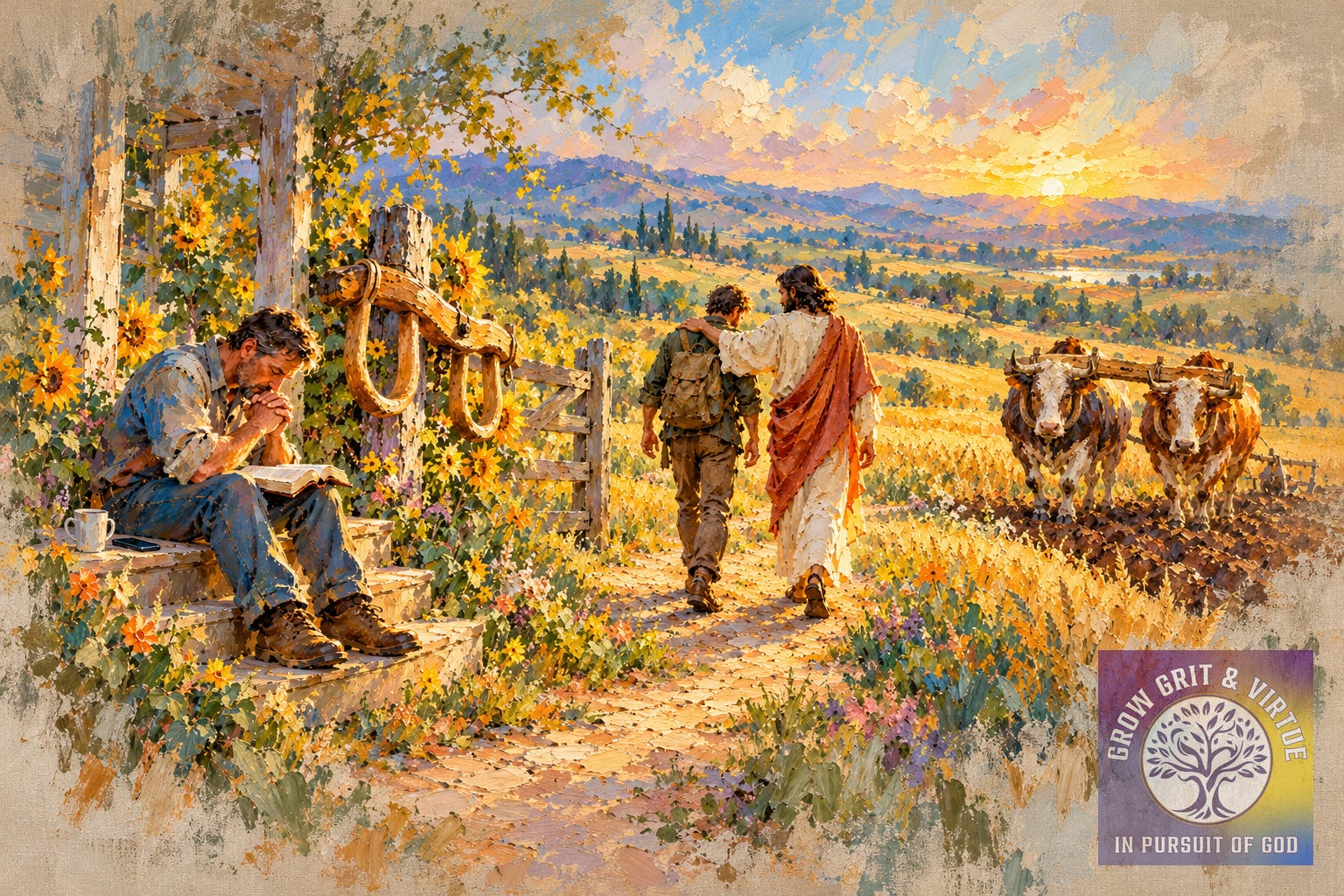
When life smacks us on the back of the head and we feel overwhelmed or worn out, we want to check out. We want to sleep, escape, and stop holding everything together for a while. So we scroll, binge, veg in front of a screen, or curl up in bed with the covers pulled up. It feels like rest, but mostly we’re just filling a silence we’re afraid to sit in.
Or we try to manage our way out. We have planners and productivity apps, AI assistants, sleep apps, prayer apps, breathing apps, and workout apps. We follow gurus and listen to experts on podcasts. More and more of us have counselors, coaches, and spiritual directors. We post quotes and mantras, keep daily rituals, and set boundaries. And for all that, most of us are still tired. If you’ve ever lain awake with your phone in your hand, too tired to sleep and too restless to put it down, you know exactly what I mean. We’ve found a hundred ways to manage the weight and almost nowhere to set it down.
I know about trying to live without rest. More than twenty years ago, I had a sleep study, and afterward the doctor described my sleep apnea as “remarkable.” He seemed almost impressed. I was less impressed. I went home with a CPAP machine and tried it, but I couldn’t use it. I tried other machines and different masks until I got tired of trying. So I plowed through. For the next two decades I got up when I had to, went to work, and drank enough caffeine to get past the daily exhaustion. I faked it and hoped I’d make it. Then my body hit a wall. My balance slipped, and I couldn’t concentrate or hold my focus. I was worn down, and there was no more ignoring it. I couldn’t plow through anymore.
God made us adaptable, and most of us are better at pushing past our need for rest than is good for us. But ignoring the need doesn’t make it go away, and sooner or later it catches up with us. The soul works the same way. It can run on caffeine and willpower for a long time, but it eventually hits a wall too.
Jesus doesn’t offer the weary a better way to handle their obligations. He doesn’t hand them another routine, another exercise, or a better self-help tool. Some of those things help. Sleep, a good counselor, a doctor, or a wise friend can be huge gifts, and God often uses them to care for us. But on their own, they can’t give us what we need most.
He’s talking about a weariness that sleep can’t cure, supplements can’t fix, and good habits can’t manage. You can sleep eight sound hours and still wake up carrying responsibilities, worry, guilt, grief, resentment, or fear.
And some burdens go deeper than any of that. Parents standing at their child’s grave. A man hearing his doctor say ALS and knowing what the coming years will take. Families living under a dictator. Wives and children living in fear of the very people who promised to protect them.
You can have the best coping skills in the world, sleep well, eat well, and understand every theory of human behavior, and still come to the end of yourself. No tool and no expert can raise the dead, undo a diagnosis, or promise that justice will finally be done. Without God’s mercy, His truth, and His power to restore what was lost, there’s nothing left to say to that kind of pain. Only Christ can meet us there, because He has gone through death and come out the other side.
We’re all looking for rest. We just misread what we need. We treat a hunger of the soul like a problem of stress, scheduling, or sleep, so we reach for counterfeits. The prophet Jeremiah saw the same thing twenty-six centuries ago. God said His people had turned away from Him, “the fountain of living waters,” and dug cisterns for themselves, “broken cisterns, that can hold no water” (Jeremiah 2:13). A cistern was a pit dug to store rainwater. A cracked one looks full for a while, and then the water drains away. Our escapes and our tools work the same way. We keep filling them, and we keep coming back thirsty.
Jesus offers what no cistern can hold. He promises rest “for your souls.”
Come to Me
Notice where Jesus points. The prophets pointed people to God, to the Law, and to the covenant. Jesus points the weary to Himself. Just before this invitation, He says that no one knows the Father except the Son and those to whom the Son chooses to reveal Him. Then He says, “Come to me.” He isn’t adding one more method to our pile of apps, experts, and routines. He’s offering Himself, and He’s the only one who can take us to the Father, where real rest is.
Jesus offers Himself because the deepest part of our exhaustion doesn’t come from our circumstances. Two people can work the same job, raise the same number of kids, and pay the same bills, and one is worn out while the other is doing fine. A man can take a two-week vacation and come home as tired as when he left. Some of the most comfortable people we know are the most restless, and some people carry crushing loads with a quiet kind of peace. If circumstances were the whole story, none of that would make sense.
What wears us out is the job we’ve taken on underneath the work. We want to prove we’re good enough and keep anyone from seeing our weaknesses. We keep explaining why we were right, because admitting we were wrong feels like proof that something is wrong with us. We try to control outcomes that were never ours to control. Underneath all of it, we’re trying to be our own savior, and nobody can do that job for long without collapsing. That kind of exhaustion is personal, and no technique can fix it. It takes a person.
Jesus’ own words show He understands more than one kind of tiredness. He speaks first to those who “labor.” The Greek word describes work that wears a person down to exhaustion, the tiredness of doing too much for too long. Then He speaks to those who are “heavy laden.” In Greek this is a single word, pephortismenoi. It comes from a verb meaning to load, the way cargo is loaded onto a ship or packs are strapped onto a mule. It describes people who’ve been loaded down by something or someone and are still carrying the weight. It comes from what’s been placed on us, weight we didn’t choose and can’t set down. Jesus invites both kinds of tired people, and He doesn’t ask which one you are before He says, “Come.”
I saw what that kind of weight does in Russia shortly after the fall of communism. Many of the elderly women, the babushkas, were permanently stooped, their backs curved by decades of hard labor. They had carried the weight so long that it changed the way they stood. Most of us will never carry a load like that on our backs, but the weight we carry inside shapes us the same way. It changes how we react, what we fear, and how we treat the people we love.
In Matthew 23:4, Jesus condemns religious leaders who tie heavy burdens on other people’s shoulders and won’t lift a finger to help. His listeners knew exactly what it was like to be loaded down with demands they could never meet.
Not all the weight we carry is our fault. Some of it just lands on us. No matter how much I love my children, I can’t fix all their pain. I’ve known husbands who fought to save their marriages, only to find that everything they did seemed to make it worse. I have friends caring for an aging parent who quietly grieve the life they had to set aside. And plenty of men work as hard as they can and still watch the bills pile up. None of them went looking for that weight.
Then there are the burdens we build ourselves. We carry resentment we won’t let go of, small lies we have to keep straight, and the slow damage of sin we haven’t confessed. These are heavy in a different way, because part of us knows we chose them.
Most of us cope with all this in ways that feel like strength, and for a while they work. Control and performance are the obvious ones. Others are quieter. We stay busy so we never have to face the questions stillness would raise. We numb a pain we don’t know how to heal. Some of us even lean on despair, because if we convince ourselves nothing will change, we never have to risk being disappointed by hope. That’s why some people who seem to handle every crisis aren’t so much strong as on constant alert.
These patterns don’t have the same cause in everyone, but often they once helped a person survive. A child in a chaotic home learns to control everything he can. Another learns that affection goes to the kid who performs. A third gets hurt by someone he trusted and learns to keep everyone at arm’s length. We shouldn’t mock these habits. Many of them began as ways to protect something worth protecting.
But a defense can outlast the danger that produced it, and then it starts running the life it was meant to protect. The man who learned never to need anyone can no longer receive love. The woman who kept peace in her childhood home by reading everyone’s mood now feels responsible for every emotion in her marriage. The child who earned approval through achievement becomes an adult who can’t rest without feeling guilty. He can lie on the couch, but his mind keeps scanning for the next thing to fix. You may recognize yourself in one of them. Most of us do.
Jesus meets us inside these patterns and, by grace, begins to reorder them. He calls us what we really are, weary and burdened. We might prefer “responsible,” “driven,” “careful,” or “the only person around here who gets anything done.” But Christ sees past the respectable label to the fear driving all that work.
We resist His help because we prefer relief that leaves us in charge.
Take My Yoke
And then Jesus says the one thing no tired person wants to hear. “Take my yoke upon you, and learn from me.”
We came looking for an escape, and He offers us an apprenticeship. A yoke is a wooden beam that fits over the necks of work animals so they can pull a plow or a cart. Many yokes were built for two, so the animals pulled side by side and shared the load. A yoke doesn’t remove the work. It gives the work direction and someone to share it with. And “learn from me” is what a master says to an apprentice, someone who learns by staying close and watching how he works and lives.
Jesus’ first listeners knew this image well. Jewish teachers spoke of taking on “the yoke of the Law,” a life shaped by God’s commands. The Book of Sirach, written about two hundred years before Christ, pictures a teacher urging his students to put their necks under the yoke of wisdom, and he tells them he worked only a little and found great rest (Sirach 51:23–27). Even the phrase “rest for your souls” comes from the prophet Jeremiah, where God tells His people to return to the old paths and walk in the good way (Jeremiah 6:16). Jesus takes all of that and claims it for Himself. What the Law and wisdom promised, He gives in person.
So Christ gives rest by giving us a yoke. That only sounds strange until we see the real problem. We carry too much, yes, but we also carry it for the wrong master. Everyone lives under some yoke. We’re all steered by something we believe will make life worth living, whether it’s approval, productivity, money, reputation, control, pleasure, or being needed. Those masters promise freedom, and they never say “enough.” Every success requires another, and every good impression has to be kept up. Saint Augustine saw this sixteen centuries ago: “You have made us for yourself, and our heart is restless until it rests in you.” So we keep running and never arrive.
Christ’s yoke is different because Christ is different. “I am gentle and lowly in heart,” He says.
Gentleness is not weakness. Jesus has complete authority, yet He doesn’t use it to crush the exhausted. “Lowly” means humble, someone who doesn’t need to stand above anyone else. The eternal Son knows who He is and knows the Father. He has nothing to prove, so He has no need to dominate, posture, or win.
Most of us are the opposite. I know I am. We’re usually harshest when we feel least secure. We raise our voice when we fear we’re losing control. We pile up explanations when we can’t bear being misunderstood. We give people the silent treatment because we want them to feel the weight we’ve been carrying. We call it honesty, principle, or boundaries. Sometimes it is. Sometimes it is anger.
Christ’s gentleness exposes us without humiliating us. He calls our burden what it is, even the parts we brought on ourselves. Then He takes the other side of the yoke.
Don’t mistake His yoke for a life of leisure. The work is still hard, and the cost is real. When Jesus says His burden is light, the word He uses for “burden” comes from the same Greek root as “heavy laden.” He doesn’t take away every load. He trades the one that’s crushing us for His own.
Love changes the weight. Any parent who has sat up all night with a sick child knows this. The work is exhausting and the lost sleep is real. Yet love makes it different from an equally hard task forced on you by a stranger for no good reason. Love doesn’t erase the cost. It gives the cost a purpose and makes it worth paying.
And Christ does more than give our burdens meaning. He bears our sin, defeats death, and shares His own life with us. He gives us His Spirit, and that’s what makes obedience possible. We don’t obey to earn the Master’s attention. We obey as sons and daughters who’ve already been welcomed home. Obedience is the fruit of grace, never the price of it.
But some of what we carry can’t be shared. It has to be forgiven.
I Will Remember Their Sins No More
The heaviest thing many of us carry is guilt, and most of us work hard to hide it. We handle it the way we handle every other burden, with counterfeits. We explain it away, blame someone else, or stay too busy to think about it. Or we punish ourselves, as if feeling bad long enough could settle the account. None of it works, because guilt is a debt, and we can’t pay it.
Six centuries before Christ, the prophet Jeremiah promised that God would one day make a new covenant with His people, an agreement written on their hearts instead of on stone. The Letter to the Hebrews says that promise came true in Jesus, and it quotes the heart of it: “For I will be merciful toward their iniquities, and I will remember their sins no more” (Hebrews 8:12).
God doesn’t suffer memory loss. He doesn’t get confused about what happened. When Scripture says God no longer remembers sin, it means forgiven sin no longer stands between Him and us. The case is closed. God doesn’t look at the repentant sinner and see only his record. The past still happened, but it no longer gets to name the person before God.
We often imagine forgiveness as God reluctantly agreeing not to bring it up again. We picture Him keeping the file, maybe moving it to another cabinet, but holding on to it in case we get too confident.
That is not the new covenant.
God’s mercy doesn’t pretend evil was harmless. God didn’t overlook our failure. He entered into it and bore our sins in His own body on the Cross. So we’re wrong if we treat sin as a minor flaw everyone has, and just as wrong if we treat it as the whole truth about who we are. The same Cross that shows how serious sin is also shows that mercy is greater.
Healthy guilt says, “I have done wrong.” It leads to repentance, repair, and change. Shame says something else. It says, “Wrong is what you are.” It convinces a person he’s so broken that even grace couldn’t help him.
For many people, one memory takes over their identity. It may be what they did, what was done to them, what they failed to prevent, or the moment they found out they weren’t who they thought they were. The event stops being part of their past and becomes who they think they are.
“I am the man who failed.”
“I am the woman who was abandoned.”
“I am the one who ruined my family.”
“I am what happened to me.”
To every one of those voices, God gives the same answer: “I will remember their sins no more.”
God doesn’t edit our history into a nicer story. He enters it. What we did, He forgives when we confess it. What was done to us, He heals. Those are two different gifts. A person who was abandoned or abused doesn’t need forgiveness for what someone else did to them. They need healing, and Christ offers that too. Either way, He begins making the person new.
That is the hope behind the promise near the end of the Bible: “Behold, I make all things new” (Revelation 21:5). God doesn’t throw the old away and start over with better material. He takes what has been damaged and restores it. Even the parts of our story we have written off aren’t beyond His reach.
Let me be careful here. Renewal doesn’t mean every consequence disappears. An apology doesn’t instantly restore trust. Forgiveness doesn’t require anyone to return to an unsafe relationship or stay where they’re being harmed. Repentance doesn’t require others to pretend they were never hurt. A man who neglected his family for years can’t repair the damage with one heartfelt conversation and a promise to do better.
Grace is not magic. It’s more demanding than magic, because it teaches us to live in the truth while carrying His yoke.
The rest Christ gives lets us face reality without being destroyed by it. Because our standing before God is a gift and not a wage, we can admit we were wrong without collapsing into self-hatred, take correction without feeling sentenced, and apologize without tacking on excuses. We can say no to people without contempt. And we can grieve what we can’t get back, trusting that God isn’t finished with the story.
Sometimes we replay our failures over and over. We pace the floor with the evidence, as if our regret could pay a debt Christ has already paid. Some of that replaying comes from anxiety, old wounds, or a tender conscience that has turned against itself. That kind deserves patience, and often real help. But some of it is a quiet kind of pride. When we refuse to accept forgiveness, we’re telling God that our sense of justice is more accurate than His mercy. We are saying the Cross wasn’t quite enough and our misery must make the final payment.
Real repentance looks different. Sorrow for sin is good. So is penance, and so is making things right with the people we have hurt. Endless self-punishment is something else. It looks like humility, but it keeps the focus on us. Repentance tells the truth, turns toward God, and lets Him have the last word.
You don’t have to keep pacing the floor. You can bring your failures to Him. For Catholics, the sacrament of confession is where this becomes concrete. You name what you did out loud, and you hear the words of absolution. For every Christian, it means bringing the memory to God in prayer exactly as it is. You don’t have to clean up your past first or pretend the wound didn’t happen.
“Lord, this happened. I did this. I was wounded here. I cannot change the past. But the past is not lord. You are.”
That prayer may not change how you feel right away. Emotions and the body often take time to catch up with what the mind knows is true. Prayer isn’t a technique for producing calm, and if peace doesn’t come quickly, it doesn’t mean you prayed wrong. Keep returning. Over time, the heart learns what the mind already knows.
The Next Faithful Thing
Coming to Christ starts in the first few minutes of the day. Don’t wait until you feel peaceful. Before you reach for your phone, give the morning to Him.
“Lord Jesus, I am tired. I come to You before I come to anything else.”
When stress rises, don’t try to manage your whole life at once. You weren’t built to carry it all. Pick the one thing pressing on you right now, whether it’s a decision, a fear, or a fresh resentment. You don’t need a five-year plan, just a clear look at the next hour. Ask, “What does faithfulness require of me right now?” Then do that. Just the next faithful thing.
The point is faithfulness, not productivity, and the next faithful thing is usually ordinary. Make the call you’ve been dreading. Stop explaining yourself. Go to bed, because the world won’t collapse while you sleep. Eat a real meal, go to Mass, call the doctor, or let someone help you. Do your work, let go of the outcomes you never controlled, and keep walking.
Take that conversation you’ve been dreading. You’ve probably rehearsed it many times, always playing both parts, and the other person is remarkably cooperative in these imaginary exchanges. Real people are less obliging. They interrupt, misunderstand, remember details differently, and bring their own wounds to the table.
Christ’s gentleness doesn’t ask you to give up the truth. It changes how you carry it. When your worth is secure in Him, you no longer need to win. You can speak the truth without swinging it like a club, and you can listen without bracing for the next attack. You go into the conversation hoping for restoration instead of protecting your image.
For me, the next faithful thing came when my body finally hit that wall. Years of too little sleep and too little oxygen had taken their toll, and my body simply stopped cooperating. I could give up and let it kill me, or I could start making better decisions so I could watch my kids grow up, grow old with my wife, and maybe see my grandkids someday. My next faithful thing wasn’t heroic. I went back to the doctor. Then I stuck with the process, through more appointments and more adjustments, until I found something that worked.
That’s what taking Christ’s yoke looks like day to day. We come to Him, learn from Him, do what He asks, and then do it again tomorrow.
Rest isn’t found at the end of a perfectly managed life. If it were, none of us would reach it. Rest begins when we let Him carry what we can’t. It deepens as we learn the character of the One who carries us. Over time we trade our panic for His gentleness and our own accusations for His mercy. And we stop writing off parts of our history, because He is already at work in the places we were sure were finished.
We’ll still grow tired. We’ll still need sleep, silence, friendship, treatment, confession, the advice of a wise mentor, and occasionally an afternoon when no one asks us to make an important decision. The tools were never the problem. We just asked them to be our savior.
Christ hasn’t promised that nothing heavy will be placed in our hands. He has promised that we won’t carry it as orphans. The yoke rests on us, but so does His presence. The past is real, but it no longer runs our lives. The work remains, but the frantic need to justify our existence can be laid down.
“Come to me.”
We have spent years reaching for everything else first. The phone, the coffee, the busyness, the explanations, the private scorekeeping. None of it could give us rest, because none of it could carry us.
Today, we can come to Him first.
Lord Jesus,
You see the weariness I try to hide and the burdens I keep trying to carry without You. You know where I have mistaken control for faithfulness, performance for strength, and numbness for peace. I am tired of trying to be my own savior.
I come to You first, as I am.
Teach me Your gentleness and lowliness of heart. Let me take Your yoke and learn from You. Forgive what I have done. Heal what was done to me. Free me from the need to defend myself before You.
Show me the next faithful thing, and give me the courage to do it.
Take what I cannot carry. Order what has become disordered. Make new what I have declared beyond repair.
Give rest to my soul, and teach me to walk with You.
Amen.
Thank you for reading. I’ve kept this essay free so anyone who’s tired can read it and pass it along. If it helped you, here are a few next faithful things you could do. Read another essay, subscribe so the next one comes to you, or support Shield Bearer Counseling Centers. We help people get counseling they couldn’t otherwise afford, so that no one has to carry their burdens alone. I’m grateful for every reader, every share, and every gift.
Thad, this is yet another masterpiece by you.
I had started highlighting and copying things that really moved me or spoke to me in some way, but finally gave up, because I was basically just going to end up copying and pasting the whole article into my response. 😂
Thank you for writing this. This wisdom that you share so freely could only have come from great struggle. That’s the only way I’ve gained any wisdom at all, anyway, and so I presume that this is the case with you too. So thank you also for allowing your pain to bless the rest of us.
There is so much great stuff in here that, as usual, I’ve saved it so I can read it again and again. Just really truly outstanding.
God bless you, my friend.