


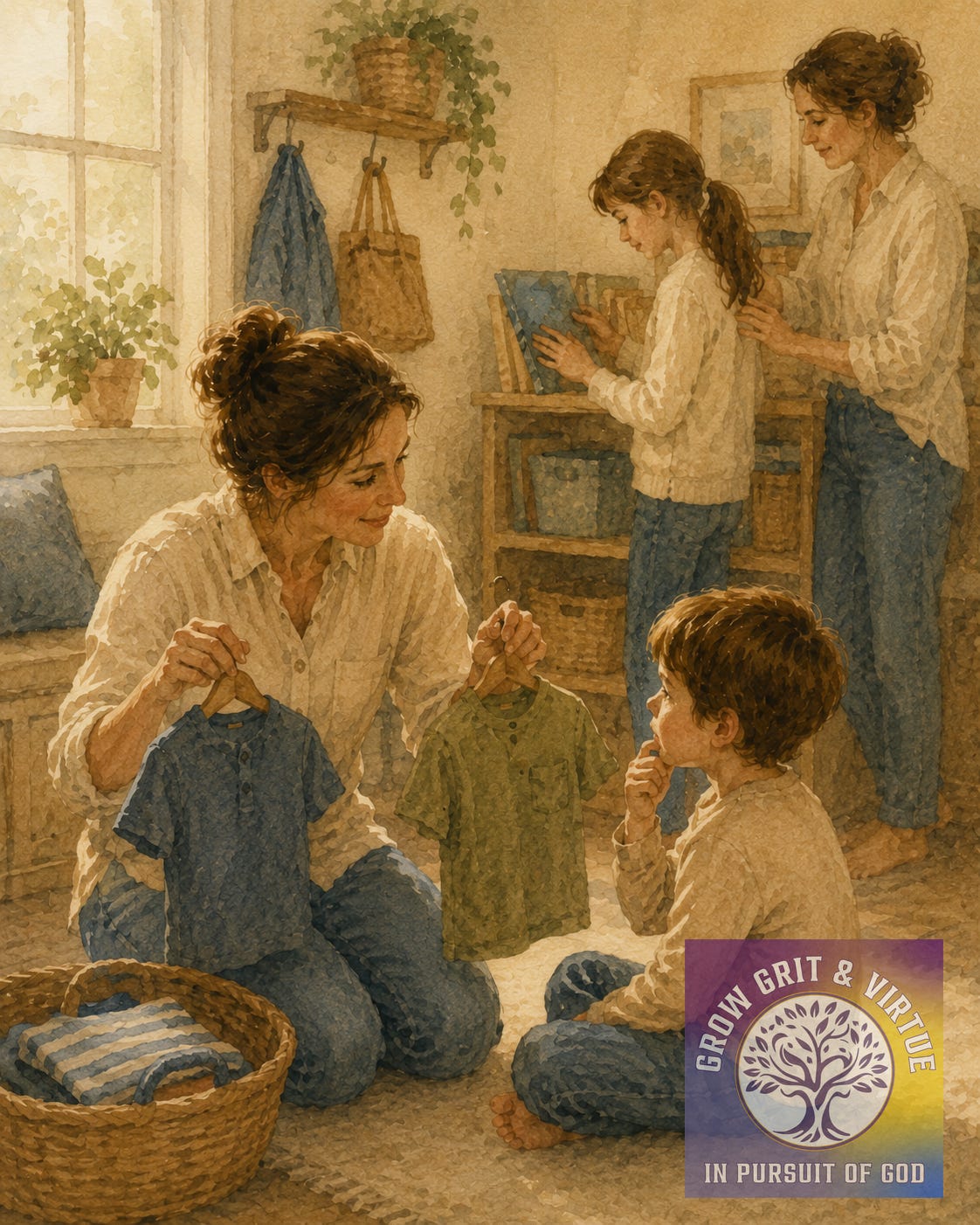
I wrote this especially for parents who are still raising children at home. But even if you do not have children, or your children are grown and making their own decisions now, there is still something here for you. Every human relationship involves the mystery of freedom. We cannot force another person to become wise, faithful, responsible, or loving. We can guide, encourage, correct, pray, and offer counsel, but we cannot choose for them. This reflection is about helping children make choices, but it is also about learning how to love others without controlling them, how to give guidance without manipulation, and how to respect freedom while still standing for what is good.
My dad used to love telling a story from when I was a baby or toddler, right around the age when I was learning to talk. I had been put to bed in my crib, and he was walking down the hallway past my room, assuming I was asleep. Then he heard a sound.
Not crying. Not calling for him. Not asking for water.
Just a small voice in the dark practicing one word over and over again: “No.”
He stopped outside the door and leaned in. The door was barely cracked, just enough for him to see me in the crib, apparently wide awake and conducting private rehearsals. “No,” I said. Then again with a different tone. “No.” Then a little firmer. “No.” Then maybe sweeter, maybe sharper, maybe with the authority of a tiny person preparing for future negotiations with the household.
He would laugh every time he told it, because he knew exactly what he had overheard. I was not just learning a word. I was getting familiar with a tool. I was trying it on, testing the weight of it, preparing for the day when I would be released from the crib and back among the people who would soon be asking me unreasonable things like whether I wanted food, clothes, a bath, or sleep.
Every parent eventually witnesses some version of that discovery. Before that, the child was demanding, of course. Babies are not exactly known for their patience. Toddlers can communicate displeasure with astonishing emotional range. But once a child discovers that tiny little word, something new begins. “No” becomes a flag planted in the carpet. No to shoes. No to pajamas. No to broccoli. No to leaving the park. No to the cup they asked for eleven seconds ago. No to the thing that was their favorite thing yesterday.
Parents often experience this as rebellion. Sometimes it is. But often it is something more basic and more important: the child is discovering agency.
We don’t interpret this agency to mean the child should run the house. A three-year-old should not be in charge of bedtime, nutrition, safety, screen time, or whether the family goes to church, school, work, or the dentist. Children need authority. They need limits. They need parents who are calm enough and strong enough to lead.
But children also need to learn how to choose.
