


It was 6:30 a.m., and I was already knee-deep in spilled cereal, missing socks, and an impromptu negotiation session with a five-year-old who had decided that today—of all days—was the day he would never wear pants again. Meanwhile, my inbox was filling up with urgent work emails, and the dog was barking at a squirrel with the persistence of an apocalyptic prophet. This was not the smooth, serene morning I had envisioned.
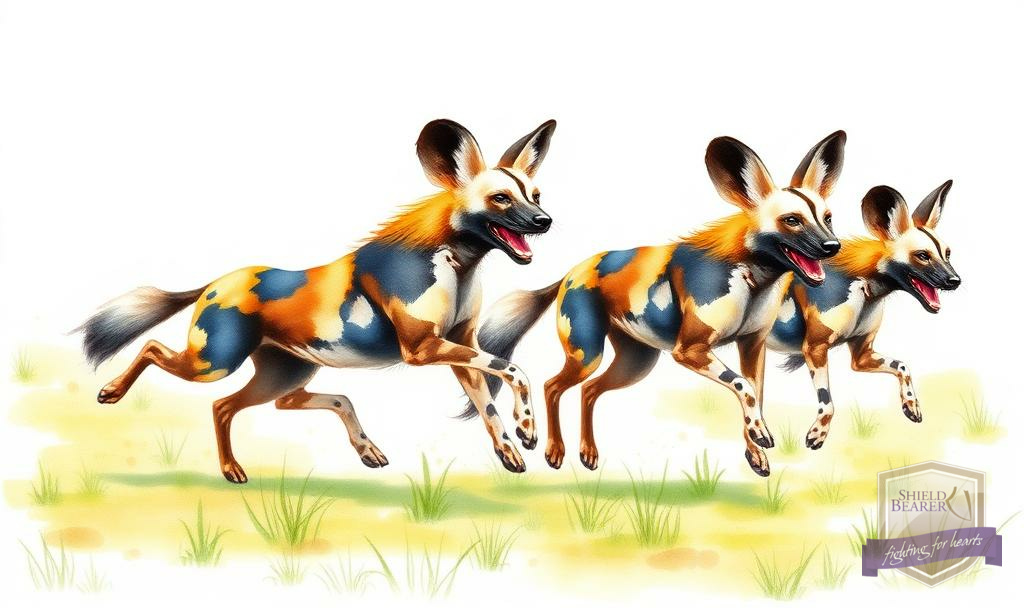
And yet, as I took a deep breath and fought the urge to either laugh hysterically or curl into a fetal position, I remembered the African wild dog.
Now, you might be wondering what a wild dog that roams the African savannah has to do with parenting, work deadlines, or your daily life. But stay with me. Because this animal—this scrappy, resilient, adaptable, joy-filled creature—has something to teach all of us about navigating chaos with grace.
The African Wild Dog: A Master of Adaptation and Purpose
The African wild dog, also known as the painted wolf (Lycaon pictus), is a masterpiece of God’s creation. Its colorful patchwork coat, uniquely patterned for each individual, is more than just decoration—it’s a built-in camouflage for survival. But what’s even more fascinating about these animals is their social structure and teamwork.
Unlike lions, which rely on sheer strength and brute force, or cheetahs, which depend on speed alone, African wild dogs thrive on adaptability, collaboration, and an uncanny ability to adjust their strategy mid-hunt. They are the most successful hunters in the animal kingdom, with a success rate of nearly 80%—far surpassing lions (30%) or even the cheetah (50%). Their secret?
