


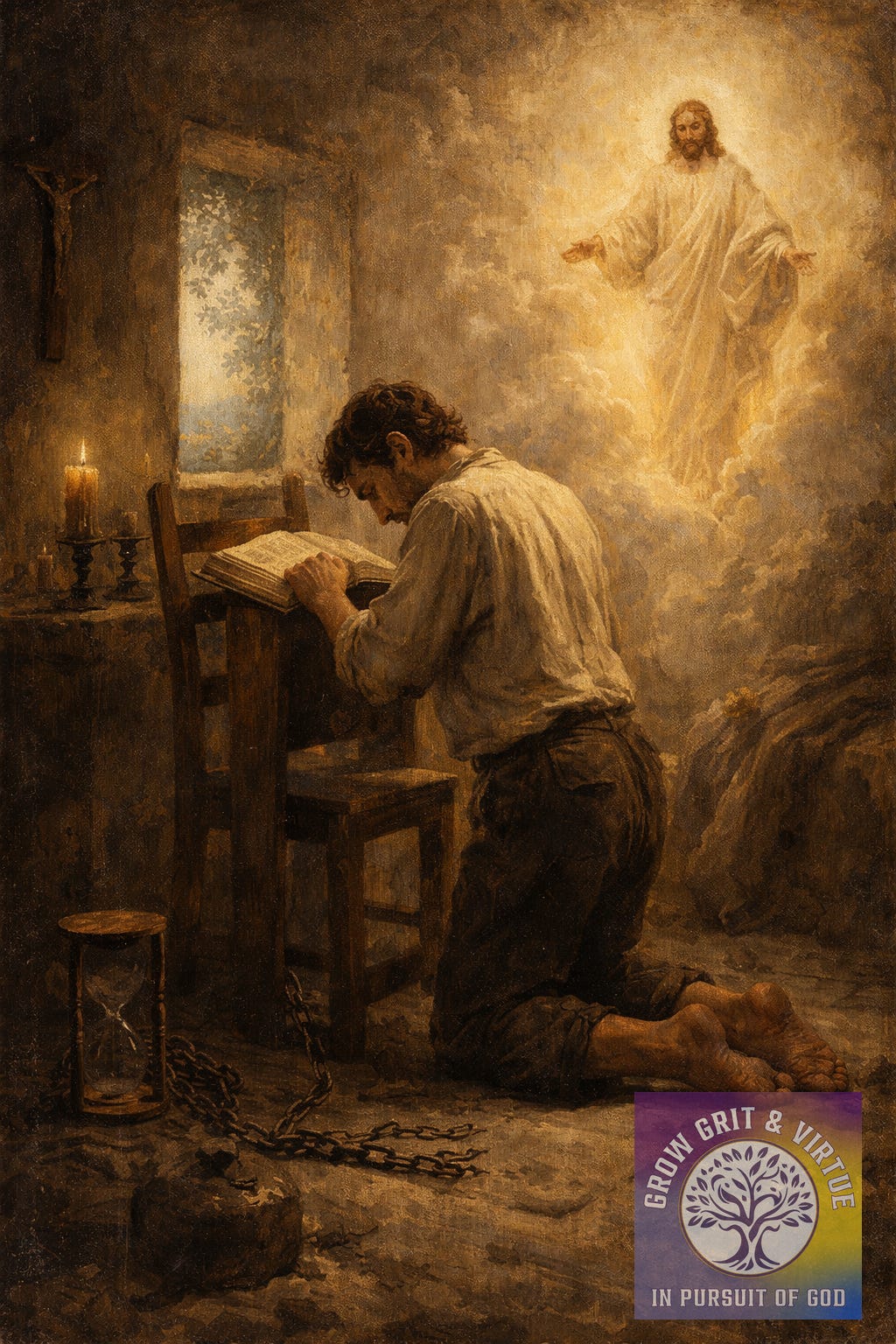
We often talk about self-discipline as if it were mainly a matter of clamping down, cutting back, and forcing ourselves into a smaller life. We imagine that becoming disciplined means becoming less spontaneous, less passionate, less alive, and maybe even less ourselves. But that is not the Christian vision. God made us, and everything He made He called good. The problem is not our humanity itself, but our humanity out of order. A lack of self-discipline is not proof that our desires, strength, emotion, hunger, or ambition are evil. It is proof that good things have slipped their proper place and begun to rule us badly. So the work of self-discipline is not to destroy our humanity, but to restore it. It is not about shrinking the self, but bringing our lives back under the loving order of God so that we can become freer, stronger, and more fully alive.
Most people do not walk around using words like virtue, evil, holiness, or moral order. But they still live with those realities every single day. We resist moral language because it can feel severe, intrusive, or judgmental. Our culture would rather keep morality soft, private, and negotiable. None of us likes feeling exposed by being told something in us is crooked or out of order. But the moment we are lied to, betrayed, mocked, used, or treated with contempt, we appeal to the very moral reality we claim to dislike.
We feel this when a husband lies and his wife says, “Don’t do that to me.” We feel this when a child is mocked on the playground and everyone nearby knows something ugly just happened. We feel this when a nurse stays late to care for a patient, when a father keeps his word, when a friend betrays a confidence, when a teenager knows she should not have sent that text, when a man looks at his phone after midnight and knows exactly why he is hiding in the dark.
People may not use faith or moral language for those moments. But they still know those moments mean something.
That is because our minds are soaked in moral meaning.
Human beings are always sorting life into some kind of better and worse, clean and dirty, faithful and false, right and crooked, noble and shameful. Even people who say morality is made up usually do not live that way for long. They still want honesty from their spouse. They still want loyalty from their friends. They still want fairness from their boss. They still want respect from their children. They still want mercy when they fail and justice when they have been wronged.
We all live as if some ways of living fit reality and some do not.
That is where moral knowledge begins.
