


There are days when I feel like I’m barely holding on.
Not in a dramatic, end-of-my-rope kind of way (although there are moments). But in the constant, if I let go of this routine, this schedule, this commitment, this child, this work project, this everything—everything might just drift away into chaos kind of way.
Like the other night, when I was standing in the kitchen at 11:47 p.m., scrubbing dried macaroni off a plate that had been “soaking” in the sink for who knows how long. My brain was buzzing with the to-do list I hadn’t finished, the emails I still hadn’t answered, and the guilt of knowing I had snapped at my kids earlier for something that, in hindsight, really didn’t matter.
And then—because exhaustion makes everything feel ten times heavier—I thought, Why do I do this? Why do I keep pushing, cleaning, showing up, trying, holding on—when I could just… not? When I could do less, care less, expect less? Would it really matter?
The whisper came: You don’t have to hold on so tightly. Just let go.
Maybe you’ve felt it too.
The weight of responsibility pressing in, the push-and-pull of staying committed when distractions, temptations, or just plain exhaustion tell you to loosen your grip.
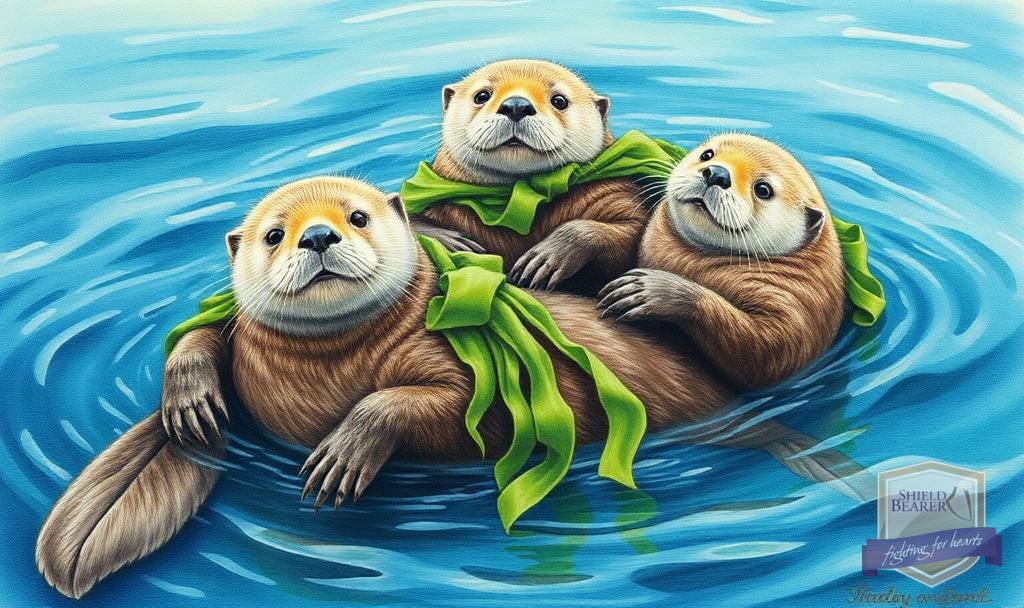
Which brings me to the sea otter.
The sea otter is one of nature’s most unexpected teachers when it comes to purity, self-control, and diligence. Not because it’s a fearsome hunter or an intimidating ruler of the deep, but because it understands something most of us struggle with daily:
When you let go of the wrong things, you can hold on to what truly matters.
The Art of Holding On and Letting Go
The sea otter is one of nature’s most unexpected teachers when it comes to knowing when to hold on and when to let go. It doesn’t grip everything in panic, nor does it drift aimlessly, surrendering to whatever current pulls it along. Instead, it clings with intention.
When sea otters sleep, they wrap themselves in kelp—tangling their small, nimble paws in the thick underwater forest so they don’t drift away in the tide. They know that if they don’t anchor themselves to something solid, they will wake up miles from where they need to be.
And yet, they also know what to let go of.
