


“I, even I, am he who blots out your transgressions, for my own sake, and remembers your sins no more.” — Isaiah 43:25
When was the last time you felt conviction? When was the last time you felt that you had fallen short and some part of your character needed honest attention?
Often the first sign of conviction does not come in prayer or in some dramatic burst of moral clarity. It comes through other people. An adult child lashes out. A husband or wife names the hurt or disappointment, and our first reaction is not sorrow but self-defense. We are sitting at dinner with friends while our children tell old family stories, and what begins as laughter turns, almost without warning, into something more painful. In their version of the memory, we do not come across very well. Our first instinct is to defend ourselves. They did not know everything. They got part of it wrong. It was more complicated than that. We want to say we are not as bad as it sounds.
“Conviction, regret, and self-accusation rarely arrive in grand cinematic moments. They show up as an interior soundtrack beneath ordinary duty.”
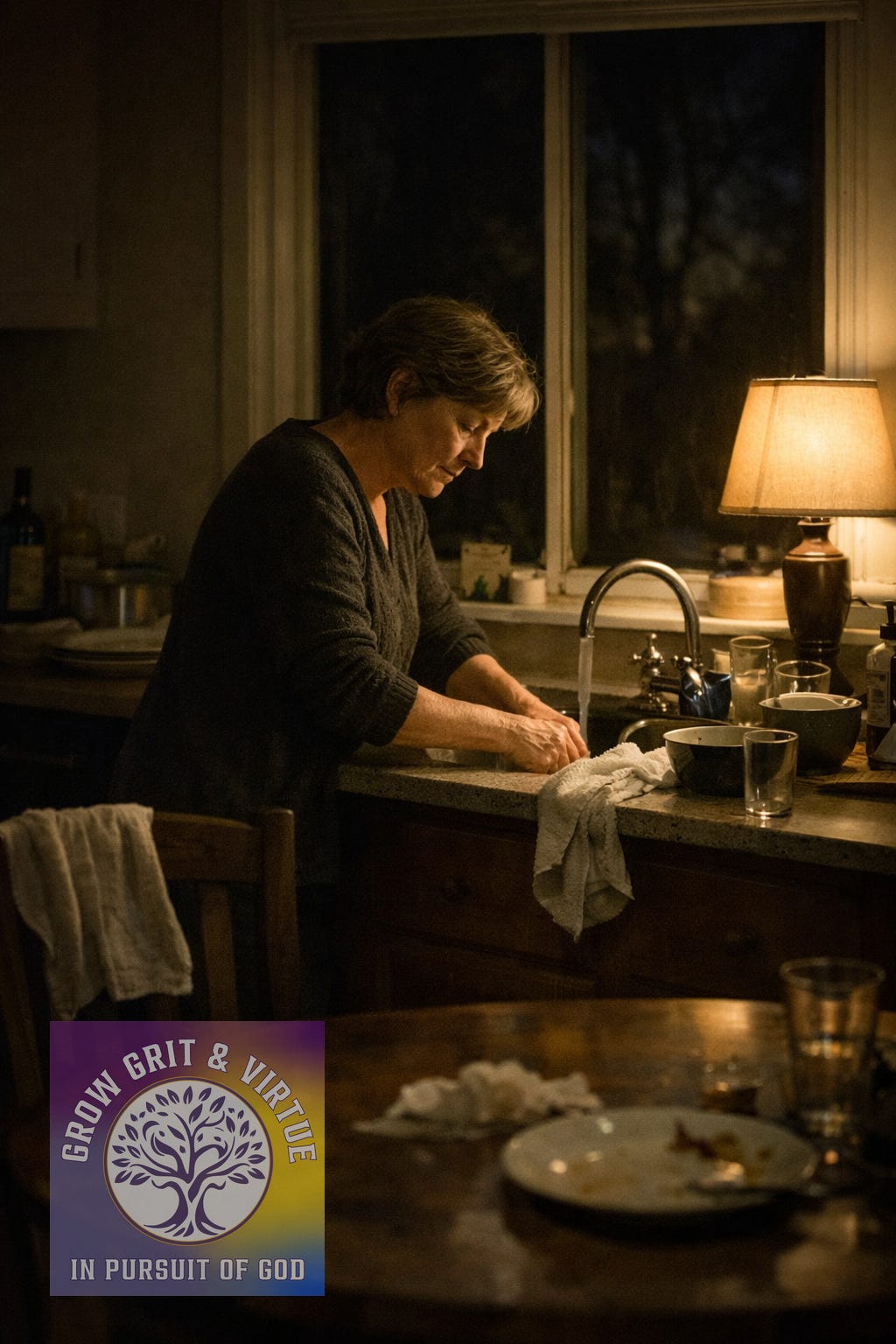
But later, when the guests leave and the house goes quiet, when we are left to clear the table, rinse the dishes, and load the dishwasher, the moment comes back from our point of view, and then other memories come with it. Long before children, there were our own parents, our own wounds, our own unchecked habits. We begin to see the words we should have changed, the decisions we made too quickly, the attitudes we excused, the hurts we repeated instead of repaired.
That is often how conscience works. Conviction, regret, and self-accusation rarely arrive in grand cinematic moments. They show up as an interior soundtrack beneath ordinary duty, a hidden mental and spiritual burden of self-talk, moral replay, recurring flashes of honesty, and the ache of having missed the mark. The deeper trouble is not only guilt, but the way guilt begins to rearrange our sense of who we are before God.
“The real battle is often not whether we can admit sin exists, but whether we believe God’s mercy actually reaches us personally.”
We think, I know God forgives in general. I am less sure what He intends to do with me. And so the real battle is often not whether we can admit sin exists, but whether we believe God’s mercy actually reaches us personally. That is the hidden fear: Yes, God forgives, but what about me, with this memory, this shame, this repeated failure, this old regret? Our conscience is under strain, tangled with shame, repetition, and uncertainty about grace, afraid that our failures are becoming more permanent than the identity God gives us.
