


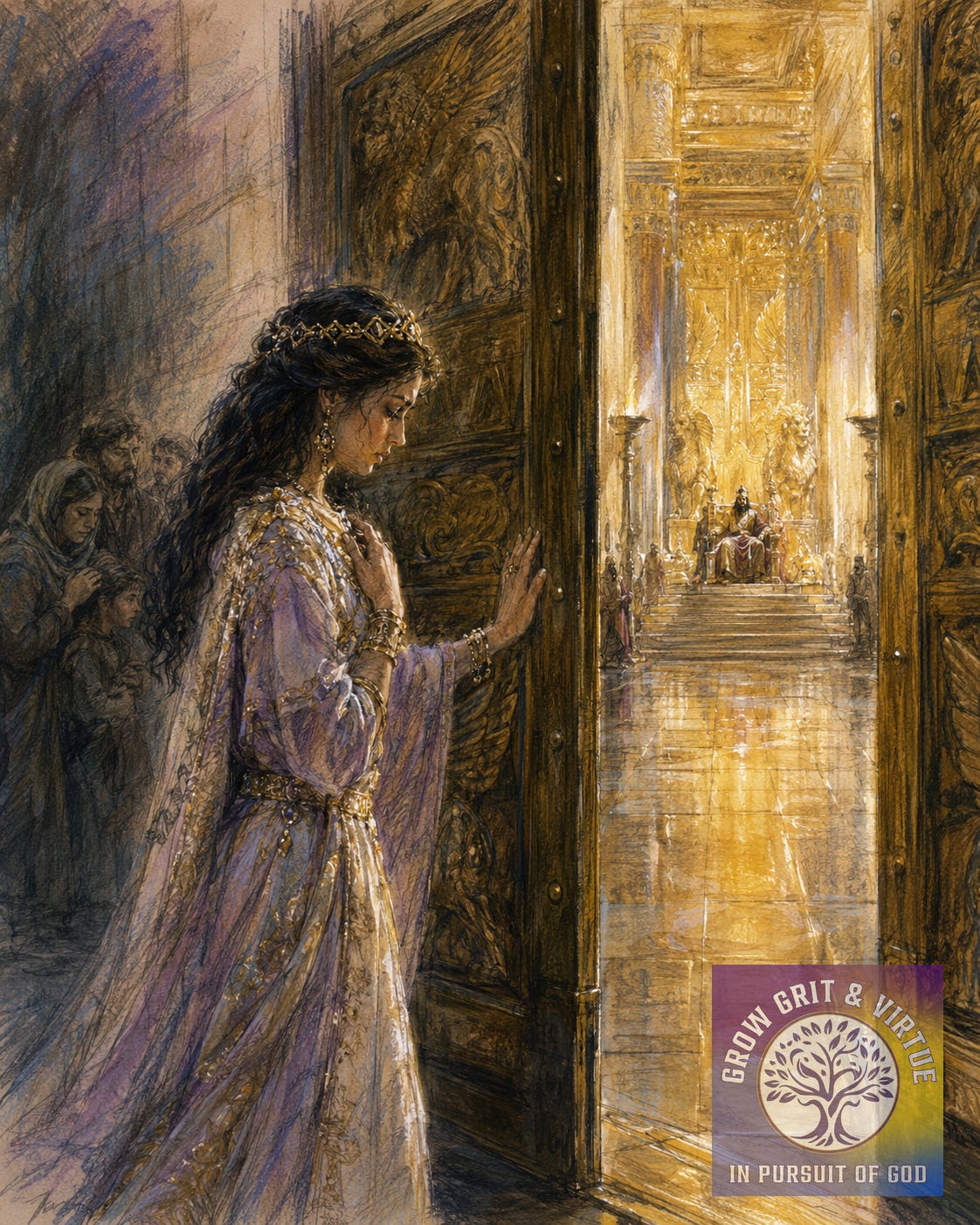
Esther is a young Jewish woman living in the Persian Empire, far from the land of her people, hidden behind royal walls, carrying a secret. Most people around her do not know who she really is. She has beauty, position, and access to the king, but she does not have safety in the way we might imagine. In that world, even a queen could not simply walk into the king’s presence. To approach him without being called could mean death.
Courage is not the absence of fear.
Then the news reaches her. Haman, a proud and powerful official, has convinced the king to approve a law that will destroy the Jewish people. Mordecai, Esther’s older cousin and guardian, sends word to her: she must go to the king and plead for her people. But Esther knows the danger. If she stays silent, she may survive for a while. If she speaks, she may die before she ever gets the chance to explain.
Esther must choose between self-protection and sacrificial love. She is trapped between fear and duty, between the instinct to hide and the call to stand in the gap for others. Mordecai tells her that perhaps she has come to the kingdom “for such a time as this.” Esther does not immediately respond with confidence. She asks her people to fast. She prepares her soul. Then she decides to act.
